Cups are the tarot’s suit of feelings. Its cards deal with love and friendship, celebration and memory, loss and contentment, and its court cards describe people by the way they handle emotion.
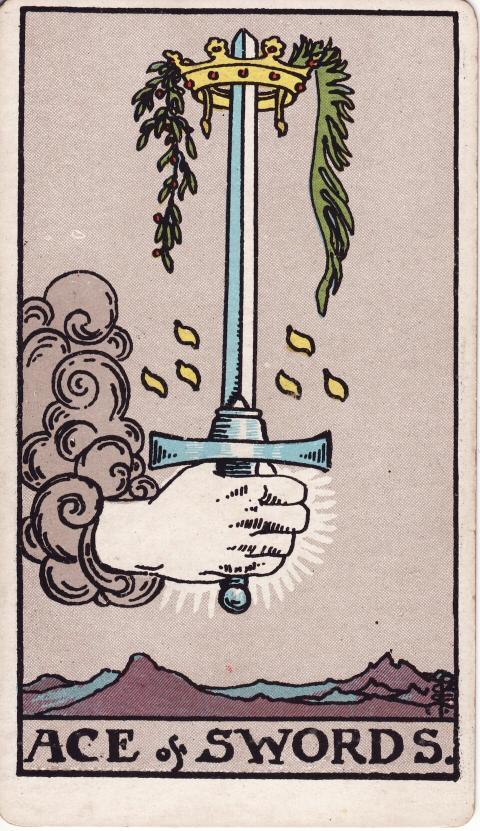
From Ace to Ten, then Page, Knight, Queen and King, the 14 Cups make up a quarter of the 56 minor cards of a 78-card tarot. Waite ties the cup to water in his King of Cups entry. The Golden Dawn’s tarot text, which Aleister Crowley published in The Equinox in 1912, names each Ace after an element: fire for Wands, water for Cups, air for Swords and earth for Pentacles.
Every Cups card and its upright keywords
| Card | Upright keywords |
|---|---|
| Ace of Cups | New affection, openness, a full heart |
| Two of Cups | Mutual attraction, a pledge, a truce |
| Three of Cups | Celebration, friendship, a team win |
| Four of Cups | Boredom, apathy |
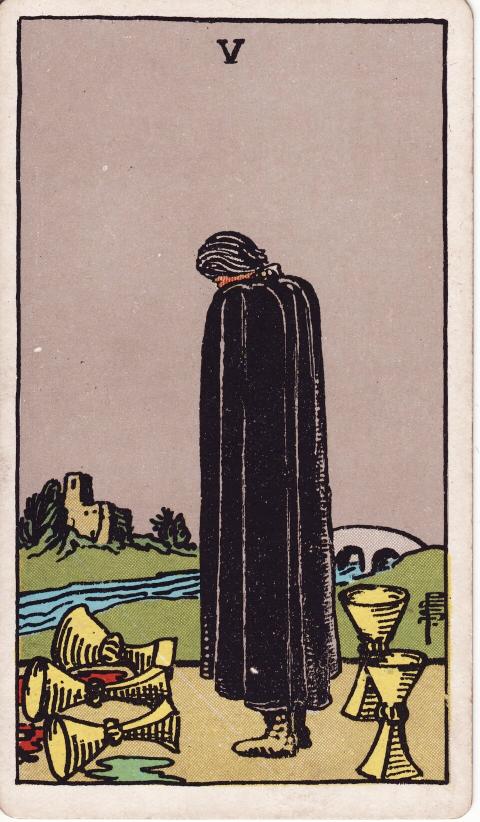
| Five of Cups | Loss, regret, missed chances |
| Six of Cups | Memories, childhood, simple gifts |
| Seven of Cups | Choices, daydreams |
| Eight of Cups | Walking away, moving on, decline |
| Nine of Cups | Contentment, satisfaction, enjoying the moment |
| Ten of Cups | Family, chosen family, shared joy |
| Page of Cups | A sweet message, a crush, new ideas |
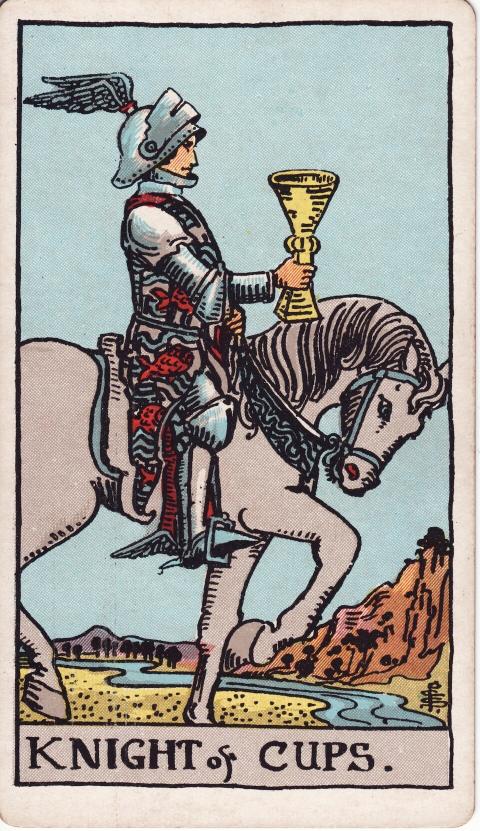
| Knight of Cups | An offer, an invitation, courtship |
| Queen of Cups | Empathy, quiet care, inner vision |
| King of Cups | Calm under pressure, fairness, creative intelligence |
How the numbers repeat across the four suits
Each suit counts from Ace to Ten, just like a pack of playing cards. Waite saw the two as near relatives:
“the substitution of Cups for Hearts, and so forth, constitutes an accidental variation”
A. E. Waite, introduction to the Lesser Arcana, The Pictorial Key to the Tarot (1910). Source: Wikisource, Part III, read November 20, 2026.
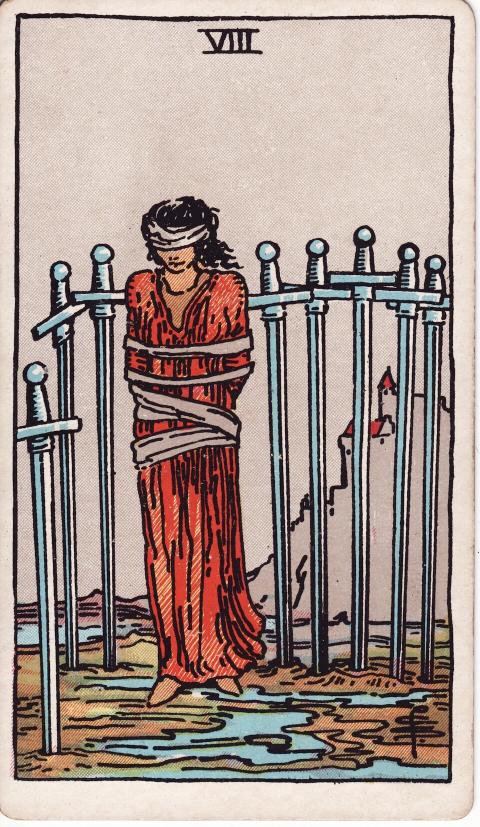
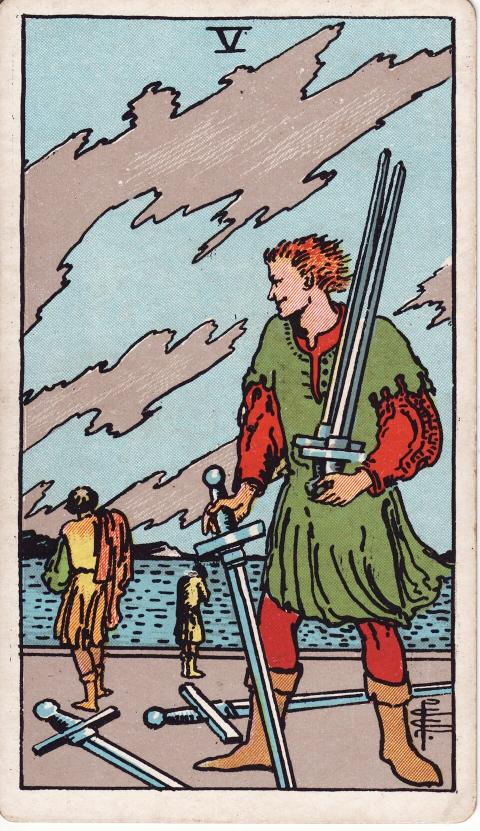
Because the structure is shared, a number keeps a family likeness from suit to suit. An Ace opens something in its suit’s area of life, and a Two pairs things up. Fives are usually the troubled cards, as the deck’s four Fives show: a cloaked figure over three spilled cups, youths in a mock fight with staves, a disdainful man holding swords as two beaten figures walk off, and two poor travelers in a snowstorm.
The suit then sets the tone. The Ten of Cups and the Ten of Pentacles both picture a household, dancing children under a rainbow in one and a couple, a child and an old man at a gateway in the other. The Ten of Wands shows a man bent under ten staves, and the Ten of Swords a figure lying face down under all ten blades.
When you draw a card, read the number for the stage and the suit for the part of life it touches.
The four Cups court cards
Four court cards close each suit: Page, Knight, Queen and King. Waite gave them little symbolism of their own and called them “a bridge of conventions” between the trumps and the numbered cards.
In the spread Waite calls an ancient Celtic method of divination, one court card stands for the person asking, chosen by age. A Knight is used for a man of forty or older and a King for a younger man, a Queen for a woman over forty and a Page for a younger woman. In this rule the Knight, not the King, is the older man.
Waite matched each suit’s court cards to looks as well:
“The Court Cards in Cups signify people with light brown or dull fair hair”
A. E. Waite, on choosing the Significator, The Pictorial Key to the Tarot (1910). Source: Wikisource, Part III, read November 20, 2026.
He adds gray or blue eyes, then lets temperament win over looks. A very fair person who is idle and sluggish, he says, belongs with Cups rather than Wands.
Older occult books may use other names. The Golden Dawn renamed the court cards, so a King of Cups in one book can be a Prince of Cups in another. Within Waite’s own suit, the Queen of Cups turns feeling inward toward a closed cup, while the King of Cups keeps his balance on open water.
Questions about the Suit of Cups
Which playing card suit matches Cups?
Hearts, in a standard deck of playing cards. Latin-suited packs from Italy and Spain still call the suit cups. Waite also notes that many older packs had a Knight in every suit, usually in place of the Queen.
Are Cups cards always about love?
No. Romance is one strand, but the suit also covers friendship, memory, boredom, loss and plain contentment. Waite’s meanings for the King of Cups even name business, law and art.
What does it mean when a spread is mostly Cups?
Many Cups in one spread usually mean the question is emotional at heart, whatever it seems to be about on the surface. We’d look next at the numbers and the court cards to see which feelings are in play.
Sources
- A. E. Waite, The Pictorial Key to the Tarot, London: William Rider & Son, first published 1910 (Wikisource transcribes the 1922 reprint). Public domain. Part III: the introduction to the Lesser Arcana (Cups for Hearts, the court cards, the Knight in older packs), the King of Cups, the Fives and Tens of all four suits, and “An Ancient Celtic Method of Divination” (Significator by age, court card coloring): Wikisource. Read November 20, 2026.
- The Equinox, Vol. I, No. 8 (London, 1912), “A Description of the Cards of the Tarot with their Attributions”, the titles of the four Aces: PDF copy. Read November 20, 2026.
- Tarot card reading, the Golden Dawn’s tarot document, its renamed court cards and its link between suits and elements: Wikipedia. Read November 20, 2026.
- Suit of cups, typical number meanings, Cups and Hearts, and a reading with many Cups: Wikipedia. Read November 20, 2026.